CUHK Develops Biohybrid Soft Microrobots with a Rapid Endoluminal Delivery Strategy for Gastrointestinal (GI) Diseases

Date: 
2021-04-09
Thumbnail: 
Body: 
A collaborative research team led by Professor Li ZHANG from the Faculty of Engineering, Professor Joseph Jao-yiu SUNG and Professor Philip Wai-yan CHIU from the Faculty of Medicine at The Chinese University of Hong Kong (CUHK) has developed biohybrid soft microrobots with an endoscopy-assisted magnetic navigation strategy for rapid endoluminal delivery. This work provides a new enabling technology for medical microrobot-based minimally invasive intervention and has the potential for treating various diseases in tiny and tortuous lumens which are hard-to-reach or inaccessible by regular medical devices.
Endoscopy-assisted magnetic navigation of biohybrid soft microrobots with rapid endoluminal delivery and imaging,
Science Robotics, Vol. 6, Issue 52, eabd2813, 2021
 
 
Medical micro-/nanorobots and their challenges in in vivo applications
 
For medical microrobots to navigate in tiny and tortuous lumens inside the human body, there are several key challenges to be extensively investigated for in vivo applications, including multi-functionalities and safety, adaptivity in a dynamic physiological environment with biological barriers, and real-time imaging and control.
 
Endoscopy-assisted magnetic navigation of biohybrid soft microrobots with rapid endoluminal delivery and imaging
 
The research team has developed stem-cell-based soft and resilient microrobots, named magnetic stem cell spheroid microrobots (MSCSMs), which are mainly composed of stem cells (~98%) and a tiny portion of magnetic particles (~2%). The soft microrobots, which possess an elastic modulus close to the human brain tissue, not only have rapid response and precise targeting capability under the magnetic field, but also show excellent adaptability to the complex surroundings by self-alternating the shape during navigation inside the body. The stem cells can be harvested from the host so as to minimise immune responses during the in vivo delivery. In addition, the soft microrobots are capable of real-time in vivo tracking by various clinical imaging techniques, including endoscopy and ultrasound imaging, which are widely adopted in endoluminal procedures.
 
Moreover, for rapid deployment of the soft microrobots in a deep and narrow space, the team has developed an integrated robotic platform, with combined clinical imaging modalities, named endoscopy-assisted magnetic actuation with a dual imaging system (EMADIS). The endoscope offers an “express lane” for the soft microrobots to avoid direct contact with the complex fluidic environment and facilitates rapid passage through multiple biological barriers in organs or tissues. The magnetic field actuation endows high-precision delivery of the MSCSMs to the target location after endoscopic deployment. The whole process is tracked by the endoscopic view (reachable and visible regions) and ultrasound imaging (invisible regions by endoscopic view). In this way, the EMADIS enables time-saving and high-precision delivery of the soft microrobots in real-time fashion for targeted therapeutic intervention towards the tiny and tortuous lumens, which are inaccessible and even invisible to the conventional endoscope and medical robots.
 
Professor Joseph Jao-yiu SUNG, CUHK Emeritus Professor of Medicine, Dean of Lee Kong Chian School of Medicine, and Senior Vice President (Health and Life Sciences), Nanyang Technological University, Singapore, remarked, “This technology has extended the reach of endoscopy to human organ compartments that conventional endoscopes, no matter how small and flexible, can never reach. This includes the smaller branches of the bile duct, the pancreatic duct, the bronchial tree and even the smaller branches of the urinary system, e.g. renal calyces and the prostate. With the magnetic navigation, the biohybrid microrobots can offer diagnostic and therapeutic opportunities that we have never seen before. It seems to be safe and the potential for clinical application is huge. Animal studies to prove its safety and clinical trials to validate its efficacy are very much awaited.”
 
Professor Philip Wai-yan CHIU, Director, Chow Yuk Ho Technology Centre for Innovative Medicine and Director, CUHK Jockey Club Minimally Invasive Surgical Skills Centre, at CU Medicine, commented, “This work successfully integrates the tethered endoscope with the untethered microrobots, which substantially extends the treatment area of the system and realises the remote and deep-site delivery of microrobots with high-precision and rapid features. Also, the biohybrid cell microrobots can carry a large portion of stem cells for targeted therapy and have enormous potential for future treatment of gastrointestinal diseases, for instance, common bile duct stones or intrahepatic duct stones, inflammatory bowel disease (IBD) and benign biliary strictures.”
 
Professor Li ZHANG, Associate Professor, Department of Mechanical and Automation Engineering, added, “In this collaborative work with our medical school partners, we have proposed a new strategy and microrobotic platform to address several key challenges in medical micro/nanorobotics. For instance, how to design the microrobots with minimised bio-safety issues and high adaptability to the applied physiological environment, and how to deliver a large amount of micro/nanorobots to the region deep inside the body in minutes with high precision and with real-time tracking capability. I feel very grateful that our partners from CU Medicine gave me and my team lots of advice and strong support during the collaboration, which is truly a critical factor in achieving this nice research output.”
 
The research team is now working closely to translate the developed technology for various application sites inside the body, and to demonstrate the therapeutic value of the developed microrobotic platform. As endoscopy technology and microrobotics continue to advance, the team envisions that the integration of both aspects will lead to a promising therapeutic system with a highly extended working distance, improved time efficiency for remote delivery, and diverse functionalities with high clinical values.
 
This work is supported by the Research Grants Council (RGC), the HKSAR Innovation and Technology Commission (ITC), the Chow Yuk Ho Technology Centre for Innovative Medicine, and the CUHK T Stone Robotics Institute.
 
The full text of the research paper can be found:
Endoscopy-assisted magnetic navigation of biohybrid soft microrobots with rapid endoluminal delivery and imaging
 
Video source: Endoscopy-assisted magnetic navigation of biohybrid soft microrobots with rapid endoluminal delivery and imaging,
Science Robotics, Vol. 6, Issue 52, eabd2813, 2021
 

This article was originally published on CUHK Communications and Public Relations Office.


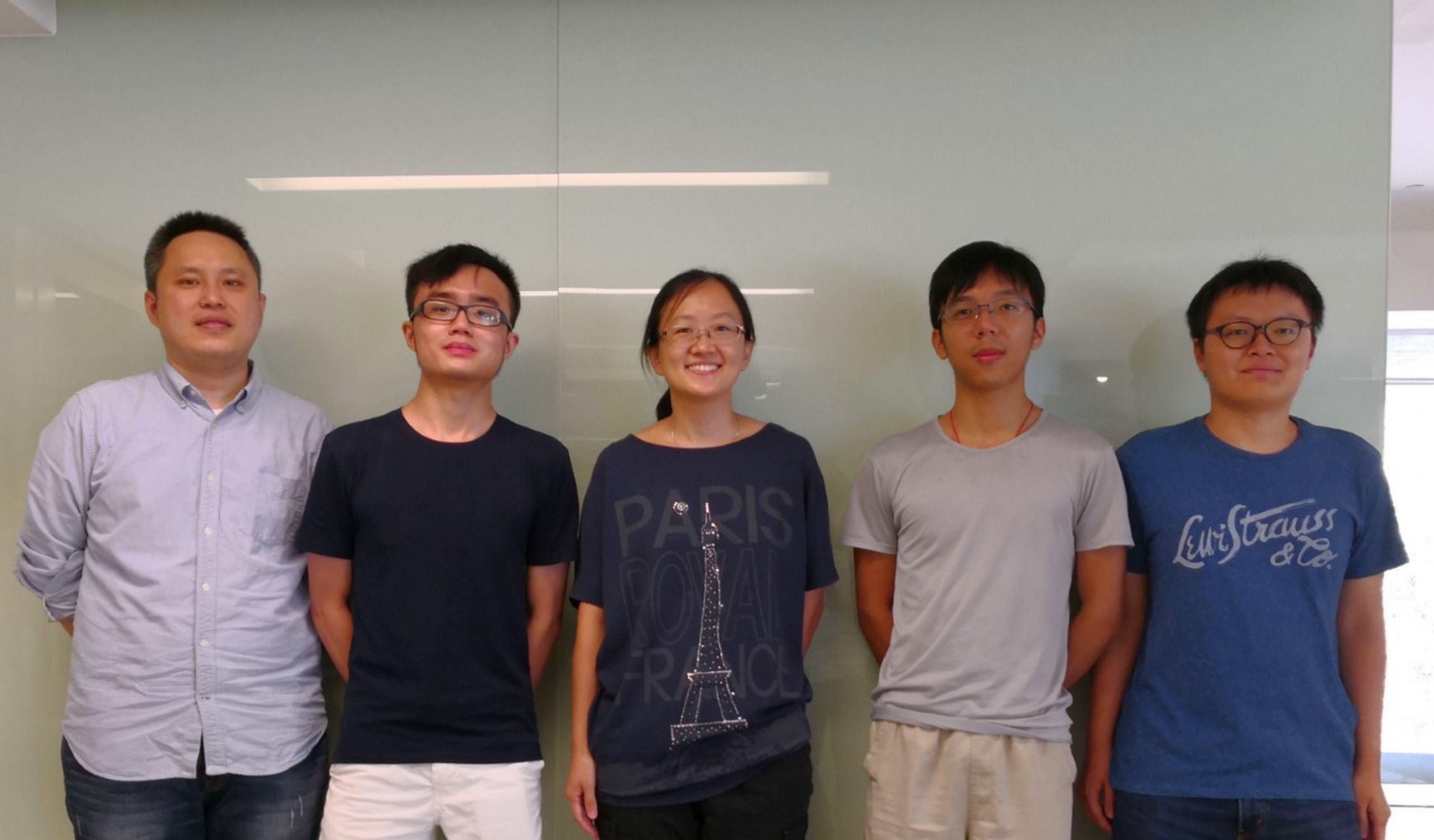
(From left) Professor Li ZHANG, Associate Professor of the Department of Mechanical and Automation Engineering; Professor Philip CHIU, Director of the Chow Yuk Ho Technology Centre for Innovative Medicine; and Professor Joseph SUNG, Emeritus Professor of Medicine (zoom image on screen) at CUHK.

Professor Philip CHIU demonstrates the endoscopic deployment of the microrobots in a human body model. The magnetic field actuation outside the model endows high-precision delivery of the microrobots to the target location.

Professor Li ZHANG states that the microrobotic system has extended the reach of endoscopy to human organ compartments that conventional endoscopes can never reach. This includes the smaller branches of the bile duct and the pancreatic duct.

Professor Joseph SUNG believes biohybrid microrobots can offer diagnostic and therapeutic opportunities that have not been arisen before. The research team will conduct animal studies to prove its safety and clinical trials to validate its efficacy.

The microrobots (see red arrow) developed by CUHK’s collaborative research team are mainly composed of stem cells (~98%) and a tiny portion of magnetic particles (~2%). The diameter of each robot is only 100 to 500 µm.


Filter: Dept: 
Faculty
MAE
Media Release

新選制有深意 科技創新受重視

全國人大常委會全票通過《基本法》附件一及附件二的修訂,筆者對此表示支持,希望政府盡力向公眾進行解說工作,盡快啟動立法程序,讓接下來多個選舉可以有序進行。筆者特別留意到,新選舉制度反映了對科技創新的重視,也顯示創科對香港未來發展的作用會加強。

Date: 
Wednesday, April 7, 2021
mc_group: 
Commentary
Media: 
Sing Tao Daily

中大開發AR復康訓練系統 中風患者足不出戶完成復康訓練

中大研究團隊開發出一套AR復康訓練系統,給中風患者使用,只需要簡單配件,患者足不出戶都能夠完成復康訓練。
 
中風患者雷世文稱:「中風初期,例如你躺在床上想轉身,也要很長時間。」
Date: 
Wednesday, March 31, 2021
Media: 
TVB

CUHK Research Team Enables Navigation and Localisation of Microrobotic Swarms in Blood Vessels Drive Forward Transformation towards Medical Applications

Date: 
2021-03-29
Thumbnail: 
Body: 

A research team led by Professor Li Zhang, Associate Professor, Department of Mechanical and Automation Engineering at The Chinese University of Hong Kong (CUHK), has developed a new strategy to simultaneously control and track a microrobotic swarm in blood vessels in real-time. The swarm control and ultrasound imaging-integrated localisation strategies serve as an important intermediate step from a fundamental understanding of microrobotic swarms in dynamic environments to clinic applications, such as active targeted delivery and localised therapeutics. The related results have been recently published in Science Advances, a prestigious international scientific journal.

Micro- and nanorobots are small-scale mobile agents that can actively pass through narrow and confined spaces such as a capillary to perform specific tasks. This makes scientists think about its biomedical applications, for example, the targeted transport of therapeutic agents to lesions deep in the body. Usually, each microrobot has a very limited capacity, thus, hundreds of thousands are needed to deliver enough drugs to achieve a curative aim.

Real-time swarm control and localisation in blood vessels remain challenging when delivering the microrobotic swarms in the vascular system, as its formation, navigation, and localisation become very different and tricky in flowing and pulsatile flowing environments. Previously, most of the reported research in this field was conducted in stagnant environments, which are very different from the physiological environment with dynamic and complex conditions. Therefore, a new strategy must be designed by considering the influence of the dynamic environment.

In this work, the team proposed a new strategy to navigate a nanoparticle microswarm in real time under ultrasound Doppler imaging guidance for active endovascular delivery, in order to tackle the challenges of swarm navigation and real-time swarm localisation in dynamic environments. A ultrasound doppler is a noninvasive test that can be used to estimate the blood flow through blood vessels by bouncing high-frequency sound waves (ultrasound) off circulating red blood cells.

Driven by a rotating permanent magnet, a magnetic microswarm was formed and navigated near the boundary of vessels, where the reduced drag of blood flow and strong interactions between nanoparticles enable upstream and downstream navigation in flowing blood. The rotating microswarm affects the motion of blood cells and disrupts normal blood flow, enabling Doppler imaging and real-time tracking from multiple viewing configurations. The dynamic Doppler feedback and the fast response of the magnetic control approach benefit the targeted navigation in different flowing conditions (i.e. stagnant, flowing blood, and pulsatile flow).

Professor Li Zhang remarked that “Our ultimate goal is to apply micro-/nanorobotics technology for translational biomedicine, such as endovascular intervention in the vascular system deep inside the human body, in a minimally invasive manner. This collaborative work with CU Medicine and ETH Zurich paves the way for solving medical problems that are currently difficult to manage with conventional tools.”

Professor Simon Yu, Professor and Chairman of the Department of Imaging and Interventional Radiology, CU Medicine, commented that the application of micro-/nanorobotic technology to endovascular intervention is still at a conceptual stage, but it may have a great potential in bringing new dimensions to embolisation, revascularisation and reconstructive endovascular procedures for the treatment of diseases. “Although there are many uncertainties and challenges ahead, hopefully with the joint expertise of engineering and radiology in our collaborative research, we may be able to see promising advances in this direction.”

Professor Bradley J. Nelson, Professor and Director of the Institute of Robotics and Intelligent Systems (IRIS) at ETH Zurich, Switzerland, commented that “This work is such an important step in moving microrobot technology out of the laboratory and into hospitals to treat patients. Our collaboration with CUHK over the years has been very fruitful. We look forward to even faster progress.”

Dr. Qianqian Wang from CUHK, the first author of this work said, “For the first time, we have achieved swarm control and imaging in such a dynamic environment. Now we are working on more experimental validations to further apply this strategy for in vivo applications and designing autonomous systems to integrate medical imaging techniques with our magnetic control system.”

This work is financially supported by the Research Grants Council (RGC), the HKSAR Innovation and Technology Commission (ITC), Chow Yuk Ho Technology Centre for Innovative Medicine, and the CUHK T Stone Robotics Institute.. Professor Zhang is currently leading a research group on conducting pioneering work with a focus on the development of medical micro-/nanorobots and their control systems. In the last three years, his lab’s researches on microrobotic swarm, biohybrid helical microrobots, remote sensing of bacterial toxin using mobile microrobots and 3D/4D printing of microrobots have been published in top journals, some of which are highlighted in the Hong Kong RGC YouTube Channel (https://youtu.be/l2NQfgW8tSQ) and the Hong Kong ITC website (https://www.itc.gov.hk/enewsletter/180901/en/nanobots_future_surgeons_in...).

The full text of the research paper can be found:

Ultrasound Doppler-guided real-time navigation of a magnetic microswarm for active endovascular delivery

https://advances.sciencemag.org/content/7/9/eabe5914


This article was originally published on CUHK Communications and Public Relations Office website.

Professor Li ZHANG leads the microrobots research team at CUHK.

Ultrasound Doppler imaging-guided upstream navigation of a magnetic nanoparticle microswarm in flowing blood.


Filter: Dept: 
Faculty
MAE
Media Release

FINTECH SEMINAR SERIES : Role of API and Data in FinTech Ecosystem

Date : March 30, 2021

Time : 5:30 pm - 6:30 pm

Event Details : https://cefar.cuhk.edu.hk/events

Speakers:
 
  • Mr. Stephen Leung, Head of IT Wealth and Personal Banking, Hang Seng Bank    
  • Mr. Michael Au, Assistant Director, Corporate Engagement, Strategic Partnerships, The Hong Kong Science and Technology Parks Corporation

Venue: CUHK Business School Town Centre (Central) or Live virtual class (Zoom)

Fee: Free Registration. A processing fee at HK$100 applies for proof of attendance

Registration Link:  https://cloud.itsc.cuhk.edu.hk/webform/view.php?id=12327010


Venue
https://cefar.cuhk.edu.hk/events
Date: 
Friday, March 26, 2021
Time
Tuesday, March 30, 2021 to 18:30
e_title: 
FINTECH SEMINAR SERIES : Role of API and Data in FinTech Ecosystem
Not Available
Allow Regsiter: 

藍色能源再現突破 港研水管納米發電

歷史上人類以水力發電,往往利用水從高至低的動能,海洋佔據地球面積約七成,海浪有巨大能量,卻難以採集,尤其是從不規則和低頻率(<5Hz)海浪採集能量,更加困難。
 
摩擦納米發電機(Triboelectric Nanogenerator,TENG)研究熱潮,從2012年美國華裔學者王中林教授研發首部TENG開始,工作原理是通過摩擦起電效應和靜電感應效應,微小機械能可轉換為電能,由於可把海浪轉換成電能,被廣稱為「藍色能源」,成近年的熱門研究項目。
Date: 
Tuesday, March 23, 2021
Media: 
星島創科版

中大工程學院研發水管式摩擦納米發電機 高效收集海洋能

香港中文大學工程學院的研究團隊最近研發一款水管式摩擦納米發電機,能夠將多種不規則低頻機械能,包括海浪能量,高效地轉換成電能,為開發「藍色能源」提供嶄新路向。
 
海洋佔據著地球表面面積約七成,是最大的能量儲存體。科研人員一直致力探索如何充分利用海洋發電,解決世界能源危機及火力發電產生的污染問題。納米發電機是開發機械能發電的關鍵技術之一,它主要分為壓電、摩擦及熱釋電三種,其中摩擦納米發電機(Triboelectric Nanogenerator,TENG)是利用摩擦起電和靜電效應,把兩種材料相互摩擦時的機械能轉換為電能
Date: 
Friday, March 19, 2021
Media: 
香港商報網

Researchers develop water-tube-based triboelectric nanogenerator for efficient ocean wave energy harvesting

The ocean covers about 70% of the Earth's surface area and is the largest reservoir of energy. Researchers have been exploring the approach for harnessing ocean energy to solve the world energy crisis and pollution problems caused by thermal power generation. The nanogenerator, including piezoelectric, triboelectric, and pyroelectric nanogenerators, is one of the key technologies for mechanical energy conversion. The triboelectric nanogenerator (TENG) makes use of the triboelectric effect and electrostatic induction to harvest mechanical energy based on contact or sliding electrification.

Date: 
Friday, March 19, 2021
Media: 
TechXplore

Leading Blue Energy Revolution: CUHK Faculty of Engineering Develops Water-Tube-Based Triboelectric Nanogenerator for Efficient Ocean Wave Energy Harvesting

Date: 
2021-03-19
Thumbnail: 
Body: 
A research team from the Faculty of Engineering has recently developed a water-tube-based triboelectric nanogenerator that can efficiently convert various irregular and low-frequency mechanical energies, including ocean wave energy, into electricity, providing a new avenue for the development of “blue energy”.
 
The ocean covers about 70% of the Earth’s surface area and is the largest reservoir of energy. Researchers have been exploring the approach for harnessing ocean energy to solve the world energy crisis and pollution problems caused by thermal power generation. The nanogenerator, including piezoelectric, triboelectric, and pyroelectric nanogenerators, is one of the key technologies for mechanical energy conversion. The triboelectric nanogenerator (TENG) makes use of the triboelectric effect and electrostatic induction to harvest mechanical energy based on contact or sliding electrification.
 
However, conventional TENG device is often based on solid/solid contact, and it is hard to ensure the contact intimacy of the two tribo-materials. In the meanwhile, the material surfaces will wear or become damaged after long-term friction. Also, the solid/solid-based TENGs need shell structures and/or mechanical components such as springs, holders, and rotors to harvest random vibration energy. The complex structure will reduce the efficiency of energy harvesting.
 
The research team led by Prof. Zi Yunlong, Assistant Professor of the Department of Mechanical and Automation Engineering at CUHK, has recently overcome the above technical limitations and developed a water-tube-based TENG (WT-TENG) for irregular and low-frequency environmental energy harvesting, such as water waves. They encapsulated water in a finger-sized tube (FEP). When water moves in the tube between regions of the two electrodes, triboelectrification happens and electric currents can be generated. Taking advantage of the flexibility of water, the WT-TENG can be operated in various modes, including rotation, swing, seesaw, and horizontal linear modes, to harvest energy from diverse mechanical movements in the environment, such as ocean waves, wind, body and vehicle movements. Due to the high contact intimacy of water and the tube surface, the output volumetric charge density of the WT-TENG is significantly enhanced, reaching 9 mC/m3 at a frequency as low as 0.25 Hz, which is beyond all previous reports.
 
Moreover, just like toy building bricks, multiple small WT-TENG units can be easily combined and integrated as one larger unit and realise multiplied electric outputs. Researchers designed two power generation units. One is a box with 34 WT-TENG units which was placed in the sea to collect ocean wave energy. Another one is a wristband composed of 10 WT-TENG units. A researcher put it on and kept swinging her arms for body motion energy harvesting. The peak power generations of the two tests were both enough to drive 150 LED light bulbs.
 
Prof. Zi Yunlong stated, “Previous designs of ocean energy harvesters have been equipped with electromagnetic-based generators which are large in size and heavy, and will only generate power if the frequency of ocean waves reaches a certain high level. Our latest research has overcome the technical hurdles and will promote the use of nanogenerators, especially in “blue energy” harvesting, offering a new direction for the development of renewable energy to achieve carbon neutrality.”
 
Related research results were recently published in the internationally renowned journal Advanced Energy Materials. The first author of the article is Postdoctoral Fellow Dr. Wu Hao, and Professor Zi Yunlong is the only corresponding author. Professor Wang Zuankai from the City University of Hong Kong participated in the guidance of this work.
 
About Prof. Zi Yunlong
 
Prof. Zi Yunlong joined CUHK in 2017. He has been working on energy harvesting through the emerging TENG technology and self-powered systems, with a series of independent research achievements and several awards. This project was funded by the Early Career Scheme of Research Grants Council, the Innovation and Technology Fund of the Innovation and Technology Commission of the Hong Kong SAR, Shun Hing Institute of Advanced Engineering, and Guangdong Basic and Applied Basic Research Fund.
 

Prof. Zi Yunlong

Dr. Wu Hao

Multiple small WT-TENG units can be easily combined and integrated as one larger unit and realise multipled electric outputs.

The research team places a box with 34 WT-TENG units in the sea to collect ocean wave energy. The peak power generations is enough to drive 150 LED light bulbs.

The team encapsulates water in a finger-sized tube. When water moves in the tube between regions of the two electrodes, triboelectrification happens and electric currents can be generated. Taking advantage of the flexibility of water, the WT-TENG can be operated in various modes, including rotation, swing, seesaw, and horizontal linear modes.


Filter: Dept: 
Faculty
MAE
Media Release
Name: 
LUM Yu Sun Vincent
Title ( post ): 
Emeritus Professor
Department: 
Systems Engineering and Engineering Management
website: 
https://www.se.cuhk.edu.hk/people/honorary-appointments/prof-lum-yu-sun-vincent/
Avatar: 
Class: 
faculty_member
Chinese Name: 
林耀燊
glossary_index: 
L

Pages