5G will give us fintech 2.0 here's why

The fintech movement has given the finance sector a much-needed shot of digital adrenaline within the last decade. But within this now hyper-competitive space, CX-focused space, there’s plenty of room for further innovation.

Date: 
Monday, September 7, 2020
Media: 
Techwire Asia
Name: 
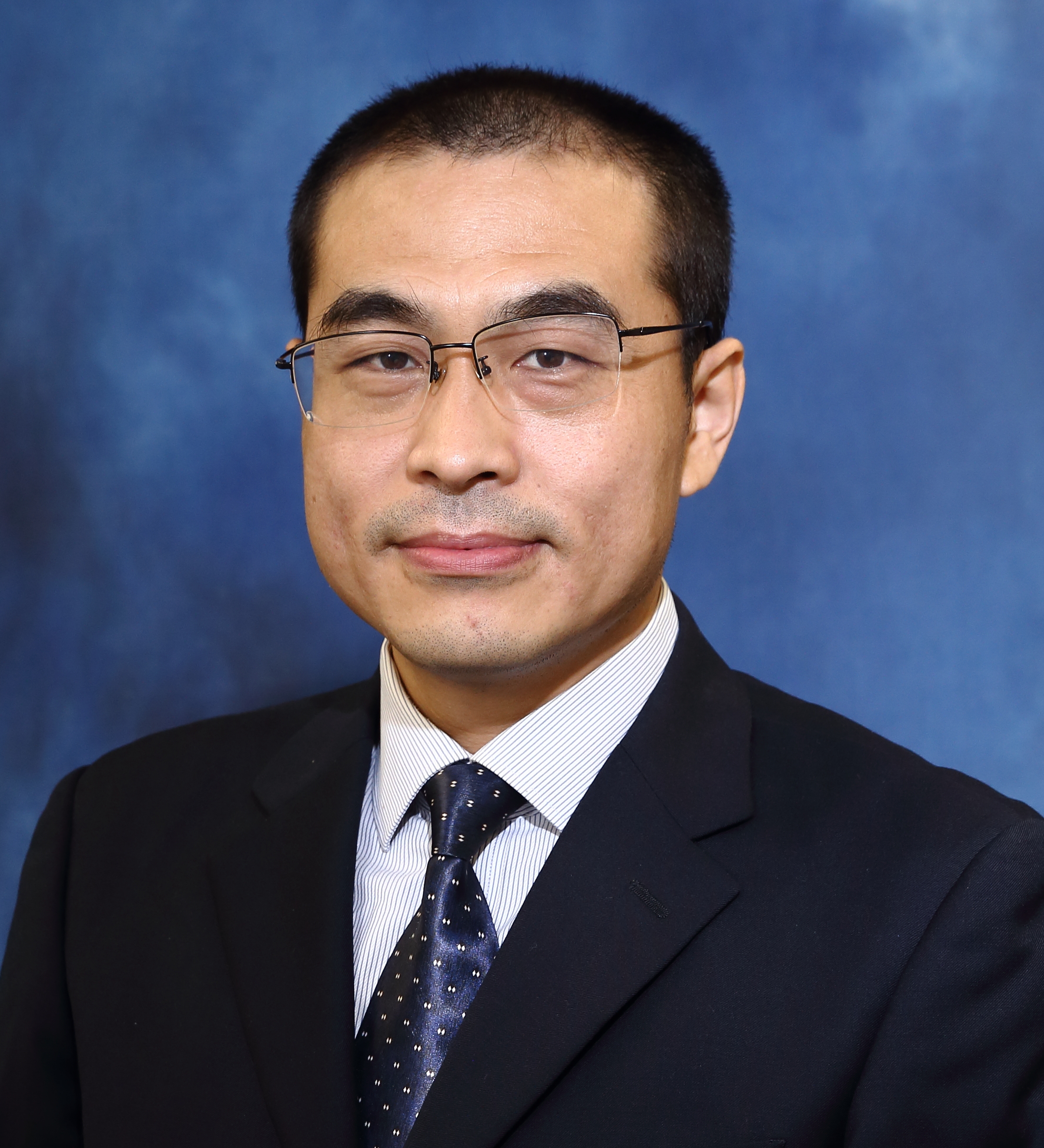
Chen Fei
Title ( post ): 
Assistant Professor
Department: 
Mechanical and Automation Engineering
email: 
feichen [at] cuhk.edu.hk
phone: 
3943 1601
website: 
https://www4.mae.cuhk.edu.hk/peoples/chen-fei/
Avatar: 
Class: 
faculty_member
Chinese Name: 
陳翡
glossary_index: 
C

中大工程學院研究推動醫學發展 人工智能研究癌病基因調控機制

癌症是香港的頭號殺手,專家一直致力找尋方法治療及解碼它與人類基因的關係。中大研究團隊,將機器學習和自然語言處理等人工智能技術應用於基因表達調控的研究,可同時研究多種調控機制對基因表達的影響,研究成果或可延伸至探索癌症的成因及治療,推動醫學發展。

Date: 
Monday, August 31, 2020
Media: 
Sing Tao Daily

中大開發AI研基因致癌成因

癌症成因與基因變異有關,為助治療癌症,香港中文大學提出用人工智能技術研究多種基因調控機制,發現可同時研究多種調控機制對基因表達的影響,突破以往只考慮單一或少量機制的傳統研究模式。中大研究團隊表示,該方法是探索基因調控的一個全新發明,盼協助醫學界找出癌症成因,從而開發出更有效的預防和治療方法。有關論文已刊登於國際權威科學期刊《Nature Machine Intelligence》。

Date: 
Monday, August 31, 2020
Media: 
大公報

中大「多種調控機制」 研基因

中大研究團隊花約一年半時間,將機器學習和自然語言處理等人工智能技術應用於基因表達調控的研究,開發嶄新的「嵌入式基因表現框架」(Gene Expression Embedding frameworK,簡稱GEEK),可同時研究多種調控機制對基因表達的影響,突破以往只考慮單一或小量機制的傳統研究模式。

Date: 
Monday, August 31, 2020
Media: 
HKET Daily

New AI Approach to Investigate Multiple Gene Regulatory Mechanisms Concurrently For the Advancement of Biomedical Research

Date: 
2020-08-31
Thumbnail: 
Body: 
 
A research team from the Department of Computer Science and Engineering has developed a new Gene Expression Embedding frameworK (GEEK), which uses artificial intelligence technologies in machine learning and natural language processing to study the regulation of gene expression. In contrast to previous works that focused on one or a few regulatory mechanisms at a time, this new framework can study the joint effects of many mechanisms simultaneously. A research article describing this new study has been published in the renowned international science journal Nature Machine Intelligence. The framework may help study the causes of cancers and treatment methods.
 
Each human body contains tens of trillions of cells. While they mostly share the same DNA sequences, their gene activities can be markedly different. Such activities, referred to as “gene expression”, are affected by many regulatory mechanisms, such as transcription factor binding and protein interactions. In 2017, Prof. Kevin Yip from CUHK CSE and his research team studied one of the mechanisms that involves regulatory elements called enhancers. They investigated how enhancers are related to gene expression, and applied the results to discover three genes potentially related to liver cancer. This and other similar studies considered only individual gene regulatory mechanisms, and therefore could not fully understand the complex interplay between different mechanisms.
 
Prof. Yip used a metaphor to explain the intricate relationships among gene regulatory mechanisms. He said, “If you fail to turn on an electronic appliance using a remote controller, it seems like there is a problem with the controller, but the problem may also lie with the receiver or compatibility issues between the two. If we have a tool that can analyse the different components at the same time, it would be much easier to identify the root cause of the problem.”
 
The GEEK framework proposed by Prof. Yip's team makes use of machine learning and natural language processing methods, treating genes as “words” to capture their relationships in “sentences”. In the published study, GEEK was used to study several diverse gene regulatory mechanisms, including contacts in three-dimensional genome architecture, protein interactions, genomic neighborhoods and broad chromatin accessibility domains. The results showed that gene expression could be better explained when these mechanisms were modeled together than when they were considered separately.
Cancer is caused by mutations that lead to abnormal cell proliferation. “GEEK represents a novel way to study gene expression in different types of cells, including cancer cells,” says Prof Yip. “We will work closely with medical experts to try explaining some causes of liver cancer using GEEK. In the long run, we hope to extend our research to other cancer types and contribute to the development of new prevention and treatment methods.”
 
Among cancer treatments, immunotherapies are receiving a lot of attention due to their much greater efficacy in some cancer types. Yet the treatment outcome varies from patient to patient. Prof. Yip hopes that artificial intelligence can be used in the future to predict patients' responses to immunotherapies, which would improve treatment precision and reduce the burden on patients.
The research project was supported by the General Research Fund of the University Grants Council. Prof. Yip's team took one and a half years to produce the results. In the area of gene regulation research, Prof. Yip has more than ten years of experience, and he was one of the first to use machine learning and natural language processing to study gene regulation.

Quisque rutrum. Aenean imperdiet. Etiam ultricies nisi vel augue.

Quisque rutrum. Aenean imperdiet. Etiam ultricies nisi vel augue.


Filter: Dept: 
Faculty
CSE
Media Release

Physics Placement Test

Purpose of the test 
 
New entrants admitted without HKDSE results (regardless of admission channel and programme of admission) are required to sit for the placement test. Based on the results of the placement test, students will be assigned to either PHYS1003 or PHYS1110.   
 
Important Notes
Students attending the placement test will be pre-assigned to PHYS1110F as an interim arrangement.
 
Test format
1. There will be five long questions subdivided into shorter multiple-choice questions and numerical questions. The time allowed is 60 minutes. 
2. Please bring a HKEAA approved calculator.
3. This will be a closed-book test.
 
Instructions
Prior preparation
1. Students should prepare their own answer sheets, A4 size without any background design (other than faint lines if ruled paper is used). 
2. Please write full name (as it appears in CUSIS) and Student ID (if known) at the top of the first page, ahead of time. 
3. Log in ZOOM 15 minutes before the start of the placement test.  
 
ZOOM log-in identity
1. Your login name to ZOOM should be the same as your full name as it appears in CUSIS (e.g. John SMITH).  
 
During the examination
1. You should write your answers on paper first. You will be asked to copy the answers to Microsoft Forms at the end of the test.  
2. There are only two types of questions in the test: multiple choice questions and numeric questions. 
    (i) For multiple choice question, select the correct answer. 
    (ii) For numeric questions, some examples are shown below. 
       
        (a) Note that the unit is given in the question. You only need to input the numerical answers (Important: the system does not accept any fractions. Your final answer must consist of numerical values only)
        Example:
        The length of each side of a square is 2 m. What is the circumference of the square in metres? 
        You should type in 8 in the answer. 
       
        (b) Note that you should give your answer to 3 significant figures.
        Example:
        If your final answer is 3.414334….., please enter 3.41 in your answer box.
        (In this example, we will set a tolerance of +/- 0.1. The system accepts any value between 3.31 and 3.51 as a correct answer in this question.) 
 
        (c) You must agree with the honour pledge below before starting the online placement test. 
        “I affirm that I will not give or receive any unauthorized help on this exam, and that all work will be my own.” 
        Please choose “I agree” in the drop-down list before starting the test. 
 
Finishing the test 
1. Invigilators will announce the end of the test. You must stop writing immediately.  
2. After the end of the placement test, you will be given additional 5 minutes to transfer your answer to Microsoft Forms.  
3. You must not leave the ZOOM meeting room until you are told to do so. 
4. Please keep your answer scripts in a safe place for a week. You may be asked to send your answer script to the markers for verification. 
 
Announcement of placement test results and physics class assignment  
1. Based on the results of the placement test, you will be assigned to a physics course. A notification email will be sent to your CUHK 365 email account by 8th September 2020. It may take some time to update your course enrolment information in CUSIS. Please attend the assigned class stated in the email starting from 9th September 2020 (Tue).   
 
Sample questions
 
(a) Calculate the velocity of the two blocks immediately after the collision (in m/s) (10 marks)
(b) Calculate the maximum angle θ (in degrees) reached by the two blocks after the collision (10 marks)
 
Please enter the value “2.24” in Microsoft Forms.
Please enter the value “60.7” in Microsoft Forms. 
Venue
Online Test
Date: 
Thursday, September 3, 2020
Time
Thursday, September 3, 2020 to 15:00
e_title: 
Physics Placement Test
Not Available
Allow Regsiter: 

「深度偽造」流行 影片假可亂真

YouTube上載了一套「麻省理工」(MIT)入門「深度學習」(Deep Learning, DL)課程6.S191的視頻,其2020年版本的觀賞率在短短半年時間之內高達55萬次之多。課程第一堂,MIT主講老師阿米尼(Alexander Amuni)教授「邀請」了一名重要人物(VIP)作開場介紹,他便是前美國總統奧巴馬(Barack Obama)。雖然總統在屏幕前只是出現了片刻,但他竟能滔滔不絕、繪聲繪色地介紹深度學習的優點。

Date: 
Tuesday, August 25, 2020
Media: 
HKEJ

Mathematics Placement Test

Purpose of the Test

The Mathematics Placement Test is a pass-fail test! It tests a student's mathematical ability for studying calculus and other areas of mathematics in engineering. The test results are used to determine eligibility for enrollment in MATH1510 (Calculus for Engineers) in order to complete one of the graduation requirements for an Engineering programme.

Students who fail the test must take both MATH1020 (General Mathematics) and MATH1510 (Calculus for Engineers) in Term 1, 2020-21. Students who pass the test will only have to take MATH1510.

There are no exemptions made for the placement test!

Placement Test Schedule

The placement test is scheduled for Thursday, 20th August 2020. It will be held online via WeBWork. Please ensure that you have a stable internet connection. Students will be notified of the link to the test, login information and the exact test time individually by email.


General Characteristics of the Test

  1. The test consists two parts. In each part, there are 15 multiple-choice questions.
  2. Notes and calculators are permitted during the test.
  3. A student who for medical or other compelling reasons is unable to sit for the placement test shall apply with documentary evidence by email to math1510@math.cuhk.edu.hk on or before 21st August 2020 (Friday). No late request or request without supporting documents will be considered. Family obligations, summer jobs, job interviews or other unexpected events are not acceptable reasons in general and will result in a fail grade for the placement test.
  4. If a student's application for absence is approved, an online make-up placement test, together with an online oral exam will be given. The details are to be announced. 


Test Description

Below is a list of topics covered in the Mathematics Placement Test, which can be used as a study guide.

  1. Functions (including but not limited to:)
  1. Domain
  2. Range
  3. Composite
  4. Inverse
  5. Piecewise
  6. Graphs


  1. Polynomials and Rational Functions (including but not limited to:)
  1. Factorial
  2. Binomial Coefficients
  3. Binomial Theorem
  4. Partial Fraction


  1. Exponential and Logarithmic Functions (including but not limited to:)
  1. Euler's Number


  1. Trigonometry (including but not limited to:)
  1. Radian
  2. Inverse Trigonometric Functions


  1. Sequence, Series and Power Series (including but not limited to:)
  1. Summation Sign
  2. Radius of Convergence


  1. Vectors (including but not limited to:)
  1. Vectors in 2D, 3D
  2. Dot, Cross Product


  1. Probability (including but not limited to:)
  1. Mean, Variance, Standard Deviation
  2. Binomial
  3. Geometric
  4. Poisson Distribution


  1. Comples Numbers (including but not limited to:)
  1. Polar Form
  2. Argand Diagram
  3. De Moivre's Theorem


  1. Miscellaneous (including but not limited to:)
  1. Algebric Simplification
  2. Law of Indices
  3. Isolating Term
  4. Quadratic Formula
  5. Completing Square
  6. Absolute Value
  7. Rationalization
  8. Difference Quotient
  9. Inequality


Venue
Details will be sent through email
Date: 
Thursday, August 20, 2020
Time
Thursday, August 20, 2020
e_title: 
Mathematics Placement Test
Not Available
Allow Regsiter: 

Academic Counselling Session for New Students

Welcome to CUHK Engineering.

To provide students with a better understanding of the overall study arrangements of Engineering programmes, new students admitted to the Engineering Faculty should attend the Academic Counselling Session.

Organiser: 
Hosted by: Faculty of Engineering
Venue
ZOOM (Information will be provided by email)
Date: 
Tuesday, August 25, 2020
Time
Tuesday, August 25, 2020 to 17:45
e_title: 
Academic Counselling Session
Not Available
Allow Regsiter: 
Class: 
Current Student

Pages