Automatic Fabrication of Clothes and Footwear to Perfectly Fit Individual’s Shape

Date: 
2019-06-26
Thumbnail: 
Body: 

The pursuit of an improved quality of life by people with increasing requirements means that conventional technology with single and standardised measurements no longer meets consumer demand. The fabrication of personalised clothes and footwear is one of the important factors that has led to the development in smart living. Prof. Charlie C.L. Wang from the Department of Mechanical and Automation Engineering and his team have pioneered Shape Driven Technology. After further improvement and development, it is now equipped with the mature fast scanning, the big-data driven artificial intelligence and the digital knitting technology to achieve its mission of automatically fabricating personalised clothes and footwear according to individual forms. In the future, consumers will be able to place orders directly with manufacturers to fabricate customised wearable products in all kinds of styles, quickly and easily. It will take the operation mode of the manufacturing industry into a great leap towards realising the upgrade to Industry 4.0 (I4.0) / smart manufacturing. This project recently won the Silver Award in the 47th Geneva International Invention Exhibition. 

With innovative vision, Prof. Wang developed the 3D geometric modeling techniques for the digital design and manufacturing of personalised comfort wetsuits, which was awarded the Computing and Information Engineering (CIE) Young Engineer Award by the American Society of Mechanical Engineers (ASME). Since then, Prof. Wang and his team have been optimising their project. They established a start-up company – Shape Driven Tech this year with the support from the University. The application of their technology has been extended to a variety of areas, including clothes, footwear, beauty, dental and medical appliances. Their aim is to achieve knowledge transfer by transforming the technology developed by the university into daily applications and promote the upgrade of I4.0.

This project can change the current operation mode of the manufacturing industry. The key to success is to break the traditional size limitation and to model it by digital 3D human bodies instead. As a result, the fabrication of clothes and other wearable products will be based solely on the physical interfaces of human bodies. With the increasing popularity of the smartphone, the research team is improving the capability to acquire the 3D human models by making use of the deep-learning and big-data analysis technology in the field of artificial intelligence. The users only need a smartphone with the relevant pre-installed apps to capture the front and the side photos of a human body, which can serve as an alternative to the complicated 3D scanning procedure. 3D human models will be built with a list of dimensional measurements based on the photos taken by the smartphone. As the system equipped with the surface flattening technique, the 3D human model will be converted into 2D pattern information via the intelligent design and auto-transfer technique of the system, followed by the preparation of the pattern and raw materials by the machines. The manufacturer can then produce personalised clothes and shoes to accurate measurements. To protect the privacy of the users, their visual identity will be hidden during the process of turning the photos into the 3D human models. 
 
Different from other apps available in the market that stay at the conventional level of size driven made-by-measure, this project serves as the bridge between the customers and manufacturers to provide the direct customer-to-manufacturer (C2M) solution. For example, with tailor-made suit for men, customers only need to provide suitable photos to the system to directly generate the information for production by the manufacturers, which saves time and operating costs. If the manufacturer is equipped with digital knitting machines, the manufacturing process can be fully automated. From order to delivery, the time for a tailor-made suit will be significantly reduced from 2-3 weeks to 2-3 days. This shows the great market potential for this project. 
 
This technology can also be applied to medical and other daily life projects. For example, dentists can customise braces according to the shape of the patient’s teeth. For surgical operations, doctors can fabricate patient-specific instruments according to the shape of the patient’s bone, which improves the working efficiency and accuracy. When making virtual reality glasses and medical masks, they can be customised according to the shape of the user’s face to achieve a more comfortable fit to prevent light and air leakage. Beauty masks and functional underwear can also be customised according to the entire face and body shape of the user. Prof. Wang said, “We are now conducting the testing of the fourth dimension – thermal. In addition to modelling the shape of a human body, we also measure the body temperature in various parts of the body to customise the material thickness and the structure of wearable products in different parts accordingly. As a result, the efficiency of heat convection in sportswear and bicycle helmets can be customised and enhanced. When being applied to a plaster for bone fractures, the design can be customised to improve the thermal comfort. I hope that this technology will help the industrial development of Hong Kong and also the world. In addition to reducing the production time and cost, it will bring more personalised products to the users. This will lead to a breakthrough of the conventional supply chain for design and manufacturing to achieve the upgrade to I4.0 / smart manufacturing.” 
 

Prof. Charlie C.L. Wang from the Department of Mechanical and Automation Engineering of CUHK (front) and Mark Sheung (back) from the research team introduce the Shape Driven Technology. This project recently won the Silver Award in the 47th Geneva International Invention Exhibition.

The users only need a smartphone with the relevant pre-installed apps to capture the front and the side photos of a human body, which can serve as an alternative to the complicated 3D scanning procedure.

To protect the privacy of the users, their visual identity will be hidden during the process of turning the photos into the 3D human models.


Filter: Dept: 
Faculty
MAE
Media Release

Prof. Michael Lyu Received Ministry of Education Higher Education Outstanding Scientific Research Output Award

Date: 
2019-06-20
Thumbnail: 
Body: 

Prof. Michael Rung-Tsong LYU, Chairman of Department of Computer Science and Engineering has received the second-class award in Natural Sciences from the Ministry of Education (MoE).  His project is titled “Reliability Prediction and Evaluation towards Software Services”.

The award presentation ceremony was held on 19 June at Hong Kong Baptist University. Ms. Sharon Ko Yee-wai, Acting Deputy Secretary for Education, Government of the Hong Kong Special Administrative Region, Dr. Clement Chen Cheng-jen, Chairman of the Council of Hong Kong Baptist University, Mr. Liu Zhiming, Deputy Inspector of the Education, Science & Technology Department of the Liaison Office of the Central People’s Government in the HKSAR, Mr. Li Naiyiu, President of Beijing-Hong Kong Academic Exchange Center, presented the prizes at the ceremony.
 
The complex, large-scale and highly dynamic operating environment of modern service-oriented systems make many traditional software reliability technologies no longer applicable. Prof. Michael Rung-Tsong LYU and Prof. Zibin ZHENG of Sun Yat-Sen University worked together to predict and evaluate the reliability of service systems. The main research results include: (1) Put forward the research problem on personalised reliability prediction of user-centered service-oriented systems, and deeply mine similar user information to provide personalised reliability prediction for current users. (2) Design a key module identification algorithm and a framework for selecting the optimal fault-tolerant strategy, facilitating system developers to quickly locate key modules that need fault tolerance and dynamically select appropriate fault-tolerant strategies. (3) Propose a reliability mechanism of user collaboration and quality of service evaluation methods, obtain personalised reliability data, and release a real-world research dataset. The dataset has been used by scientific institutions and enterprises in more than 40 countries, and it is employed in experiments, with over 200 published papers. Relevant research results have generated more than 100 academic papers, including two ESI high cited papers, 30 transactions papers, three top conference best papers, with 5,500 Google scholar citations in total, cumulative SCI index over 800 times, and a single paper cited up to 520 times. The proposed algorithms have been effectively applied in industry.
 
About Higher Education Outstanding Scientific Research Output Awards
 
The Higher Education Outstanding Scientific Research Output Awards (Science and Technology) is set up by the MoE to recognise outstanding research projects at all tertiary institutions in mainland China. Since 2009, Hong Kong's tertiary institutions have been included in the scheme. The award is presented to individuals or units who have made remarkable contributions in the areas of scientific discovery, technological innovation, science and technology advancement and implementation of patented technologies. The Natural Sciences Award honours researchers who have made discoveries in natural science and applied science, or given explanations to natural phenomena and characteristics. The Technological Innovation Award honours individuals or units who have made important technological innovations with products, processes, materials and systems by using scientific and technological knowledge. 
 
This article was originally published on CUHK Communications and Public Relations Office website and edited by the Faculty of Engineering.
 

Prof. Michael Lyu (right) receives the award certificate from Ms. Sharon Ko.


Filter: Dept: 
Faculty
CSE
Media Release

中大機械與自動化工程學教授 劉雲輝農民子弟變機械人專家

香港中文大學機械與自動化工程學教授、天石機器人研究所所長劉雲輝教授來自湖南農民家庭,八十年代到「機械人王國」日本求學,繼而投入機械人的研發與製造之路。他和團隊主要研究「醫療及工業用途」機械人,其中以「視覺導航智慧搬運機器人系統」最為成功,實現工廠或倉庫貨物的自動搬運,解決人手不足問題,此外亦研發出功能性內鏡鼻腔手術的內窺鏡輔助操作機械人。

Date: 
Thursday, May 30, 2019
Media: 
HKEJ

【PwC HackaDay 2019】贏比賽奪 Dream Job 上屆冠軍醒你參賽貼士

一畢業就加入全球四大會計師事務所工作,相信是不少準大學畢業生的夢想。三位來自香港中文大學計算機科學與工程學系、信息工程學系和數學系的學生梁成悅(Jason)、湯湛飛(Chris)、陳兆俊 (Erwin),就於去年畢業後獲羅兵咸永道會計師事務所(PricewaterhouseCoopers, PwC)聘用,成為網絡安全部門的職員。

Date: 
Tuesday, June 11, 2019
Media: 
wepro180

New Photodetector to Enhance High-Speed Optical Transmission to Meet the Tremendous Traffic Growth in Big Data Era

Date: 
2019-06-12
Thumbnail: 
Body: 

In the era of big data, the rapid increase in data traffic has aroused urgent demands for high-speed optical transmission. Ms. Gao Yun, a PhD student under the supervision of Professor Shu Ching-tat Chester at the Department of Electronic Engineering has published a paper in Optica recently, titled “High-speed Van der Waals heterostructure tunnelling photodiodes integrated on silicon nitride waveguides”. The research team has designed, fabricated, and characterised a new family of integrated waveguide photodetectors that promises exceptional benefits for applications in data centre interconnects and supercomputers. Also authors of the paper are Professor Tsang Hon-ki and Mr. Zhou Guodong from the same Department.


In recent years, optical interconnects have been proposed to alleviate the thermal bottleneck of the clock frequency in conventional electrical interconnects in CMOS (Complementary Metal-Oxide-Semiconductor) integrated circuits, to provide new levels of computational capability. At the receiver side of optical communication systems, photodetectors are used to convert optical signals back into electrical signals for further processing. Graphene photodetectors have previously demonstrated ultrafast response and broadband operation. However, due to the absence of an electrical bandgap in graphene, the photodetectors usually suffer from a huge dark current under a direct current bias. The dark current refers to the unwanted excess leakage current that occurs in the absence of light. It gives rise to detrimental noise in an optical receiver circuit.


To minimise the dark current of graphene photodetectors, the research team has demonstrated van der Waals heterostructure tunnelling photodiodes integrated on silicon nitride (Si3N4) waveguides. At the telecom wavelengths, a high on/off current ratio (over 10,000), a responsivity of 0.24 A/W, and a large bandwidth (56 GHz) have been experimentally achieved. The on/off current ratio has three orders of improvement when compared with previous graphene photodetectors. Si3N4 is more suitable for CMOS-compatible backend processing than silicon. The lower relative permittivity of Si3N4 also benefits a smaller device capacitance, which makes Si3N4 a better material underneath a high-speed device. This work provides a viable route towards high-bandwidth and high-sensitivity integrated photodetectors for data centre interconnects and supercomputers.


Ms. Gao Yun also received the prestigious “OSA/Corning Women in Optical Communications Scholarships” at the Optical Fiber Communication Conference and Exhibition (OFC) in San Diego, California, in March 2019 based on related research in graphene-based high-speed waveguide photodetector
 

This article was originally published on CUHK Communications and Public Relations Office website and edited by the Faculty of Engineering.

Schematic of the van der Waals heterostructure tunnelling photodiodes integrated on Si3N4 waveguides.

Ms Gao Yun (1st left) receives the “OSA/Corning Women in Optical Communications Scholarships” at the Optical Fiber Communication Conference and Exhibition.

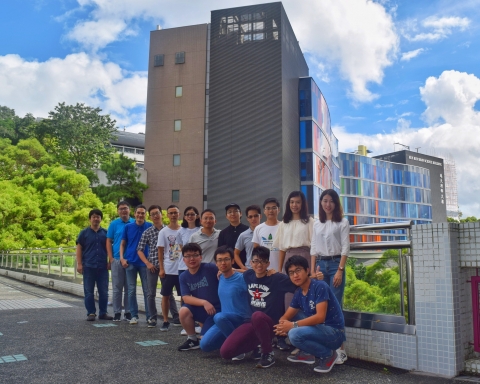
Professor Shu Ching-tat Chester, Professor of the Department of Electronic Engineering, CUHK (5th left), Ms Gao Yun (2nd right), and members of the research team.


Filter: Dept: 
Faculty
EE
Media Release

中文大學首創人工智能課程 為未來創科五萬職位提供人才

中文大學計算機科學與工程學系開辦「人工智能:系統與科技」課程,是香港首個人工智能工程學士學位,讓學生擁有建立 AI 系統、並用作數據分析的能力。首屆課程將會提供 30 個學位,希望可以回應社會對這方面人才逐漸提升的需求,而政府預計的五萬個創科相關職位亦能夠提供龐大的發展潛力。


Date: 
Wednesday, June 5, 2019
Media: 
Unwire.pro

Engineering Students Reap Most Awards at Hong Kong University Student Innovation and Entrepreneurship Competition 2019

Date: 
2019-05-30
Thumbnail: 
Body: 

Twenty-one student teams from CUHK received awards at the Hong Kong University Student Innovation and Entrepreneurship Competition 2019, held on 25 and 26 May, eighteen of which was formed by students of the Faculty of Engineering. 

The University, with the largest number of awards among tertiary institutions in Hong Kong, has also received the Outstanding Institution Award and completed a sweep of all ten Mathematics and Physics / Mechanics and Control Systems awards under the Innovation category, which exemplified CUHK’s research and innovation excellence in these areas.

Innovation First-class Award: Multi-modality Digital Holography-based Two-photon Excitation Microscope

Ren Mindan and his team members, who are PhD students from the Department of Mechanical and Automation Engineering, won the first-class award with “Multi-modality Digital Holography-based Two-photon Excitation Microscope”. The system combines a powerful Digital Micromirror Device (DMD) random-access scanner with high-speed resonant galvo-scanners to realise many new functionalities that no current commercial solutions can provide, especially the optical imaging functions such as video-rate fluorescent imaging with simultaneous multi-point optical stimulation, ultrafast axial scanning, multi-plane imaging, and curved plane imaging.

Ren Mindan said they developed the mechanical units and operating software in a year and a half, under the supervision of Prof. Shih-Chi Chen, Associate Professor from the Department of Mechanical and Automation Engineering. The team is now working with the Hong Kong Eye Hospital, using this new invention to find out the molecular mechanisms of optic nerve diseases and degeneration.

The Hong Kong University Student Innovation and Entrepreneurship Competition 2019 was organised by the Hong Kong New Generation Cultural Association.  A total of 676 students from 16 local tertiary institutions submitted 203 projects for the two categories of the competition, namely “Innovation” and “Entrepreneurship”.  Winning teams will represent Hong Kong at the biennial “Challenge Cup” National College Students’ Extracurricular Academic Science and Technology Contest, the China College Students’ “Internet Plus” Innovation and Entrepreneurship Competition and the Beijing-Hong Kong Youth Innovation and Entrepreneurship Cup.

The following is the list of CUHK awarded projects:

Award

Name of Project

Name of students

Affiliated Department

Category: Innovation

First-class

Multi-modality Digital Holography-based Two-photon Excitation Microscope

REN Mindan, GENG Qiang, CHEN Dihan, CHEN Jialong

Department of Mechanical and Automation Engineering

Second-class

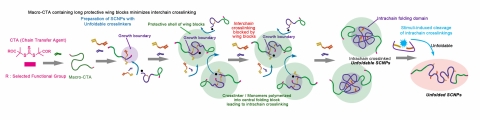
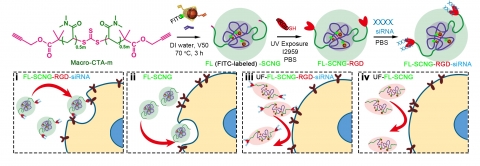
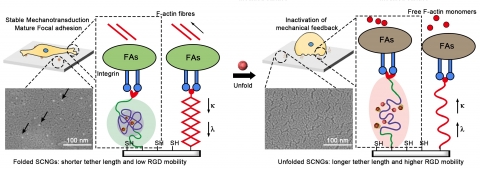
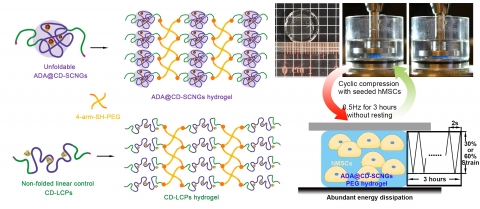
Unfoldable Supramolecular Single Chain Nanogel-based integrin ligand tether regulates mechanosensing of stem cells

CHEN Xiaoyu

Department of Biomedical Engineering

Second-class

Design and development of an economical mechanical

gastrointestinal tract simulator

YAN Kim

Department of Mechanical and Automation Engineering

Second-class

An Intelligent Robotic System for Autonomous Airport Passenger Trolley Collection

HO Danny, SHEN Yutian, ZHANG Ang, LI Chenming

Department of Electronic Engineering

Third-class

CRISPR/Cas9 3D bioprinted platform for rare genetic disease modeling

PANG Tak Keung, HA Tin Yan,

HUNG Li-Min, LAU Alexandria


Department of Biomedical Engineering, School of Biomedical Sciences

Third-class

Simple and rapid colorimetric detection of serum lncrna biomarkers for early diagnosis of pancreatic cancer

LOU Ut Kei, WONG Chi Hin

Department of Biomedical Engineering

Third-class

Controlling the reduction extent for optimal performance of a Ni/Al2O3 dry reforming catalyst

LI Ming

Department of Mechanical and Automation Engineering

Third-class

Tail inspired robotic system design and control

CHU Xiangyu, AN Jiajun, LO Chun Ho, CHUNG Tsz Yin

Department of Mechanical and Automation Engineering

Third-class

Novel compliant robotic instrument for organ retraction and space opening

YIP Hoi Wut, CHU Xiangyu, CAI Yuanpei, CHUNG Tsz Yin

Department of Mechanical and Automation Engineering

Third-class

Self-propelled pole climbing robot with kinesthetic teleoperation robotic arm

MAN Cheuk Ying, WONG Fei Yan, 

CHEUNG Chi Hang, CHEUNG Chun To


Department of Mechanical and Automation Engineering, Department of Computer Science and Engineering

Merit

Ketone Breathalyzer

LOU Kuan Wen, YING Yau Kit Stanley

Integrated BBA Program, Department of Systems Engineering and Engineering Management

Merit

Self powered smart watch and wristband

CAI Mingjing, WANG Jiahua

Department of Mechanical and Automation Engineering

Merit

Cable driven biomechanical energy harvester over the knee

CHAN Hung Tin Hugo

Department of Mechanical and Automation Engineering

Merit

Wearable actuated material using smart materials to excite the C-tactile afferents for comfort feeling

SIU Ngai Chun Edward, CHOW Timothy Hong Yin

Department of Mechanical and Automation Engineering

Merit

Wireless Real-time Microscope in Ultracentrifuge

WEI Yuanyuan, KUO Hsu Ting

Department of Biomedical Engineering

Category: Entrepreneurship

Third-class

Capmi Motion Capture Sensor Development

HO Chun Kit, CHENG Lai Ying, CHOI Ka Chon

Department of Computer Science and Engineering, Integrated BBA Program

Third-class

Gabi

MAK Lai Ying, WONG Tsz Yin, LEE Hoi Sun

Department of Government and Public Administration, Department of Computer Science and Engineering

Third-class

RExChat

YING Yau Kit Stanley, LOU Kuan Wen, MAK Shui Ying, XIE Yingxue, MA Cheng Keng, SO Wai Ying

Integrated BBA Program, Department of Systems Engineering and Engineering Management


This article was originally published on CUHK Communications and Public Relations Office website and edited by the Faculty of Engineering.


18 out of 21 CUHK Engineering projects were recognised, the most among tertiary institutions in Hong Kong.


Filter: Dept: 
Faculty
BME
CSE
EE
IE
MAE
SEEM
Media Release

Expert says Huawei can switch from Android in six months

“In a free economy, companies are usually reluctant to change and try new products. But in a controlled economy like China, if the government orders phone makers to use a particular local OS, such an OS can be well adapted by the markets within a period of short time,” Wong Kam-fai, Associate Dean (External Affairs), Faculty of Engineering, Chinese University of Hong Kong, told Asia Times.

Date: 
Wednesday, May 22, 2019
Media: 
Asia Times

《BBC全球問答》中文特別節目回放:AI時代年輕人如何求職

21世紀的第二個十年即將結束,全球正經歷政治、文化、科技等全方位的巨變。有研究顯示,現在的年輕人即將經歷可能是人類歷史上最大的一次斷裂式的動蕩,其原因是電腦算法、程序、智能機器人開始逐漸取代人類。專家預測,未來十年中,30%的現有職業和專業即將消失。更多大家聞所未聞的職業、專業將應運而生。

Date: 
Monday, May 27, 2019
Media: 
BBC C

Pages